
£1 Minimum Deposit Casinos in the UK: Terms Explained
 Available in GB
Contents
Understand how cashier minimums differ from bonus qualifying amounts and how payment routes can affect a low-deposit account.
What a £1 Minimum Deposit Actually Means
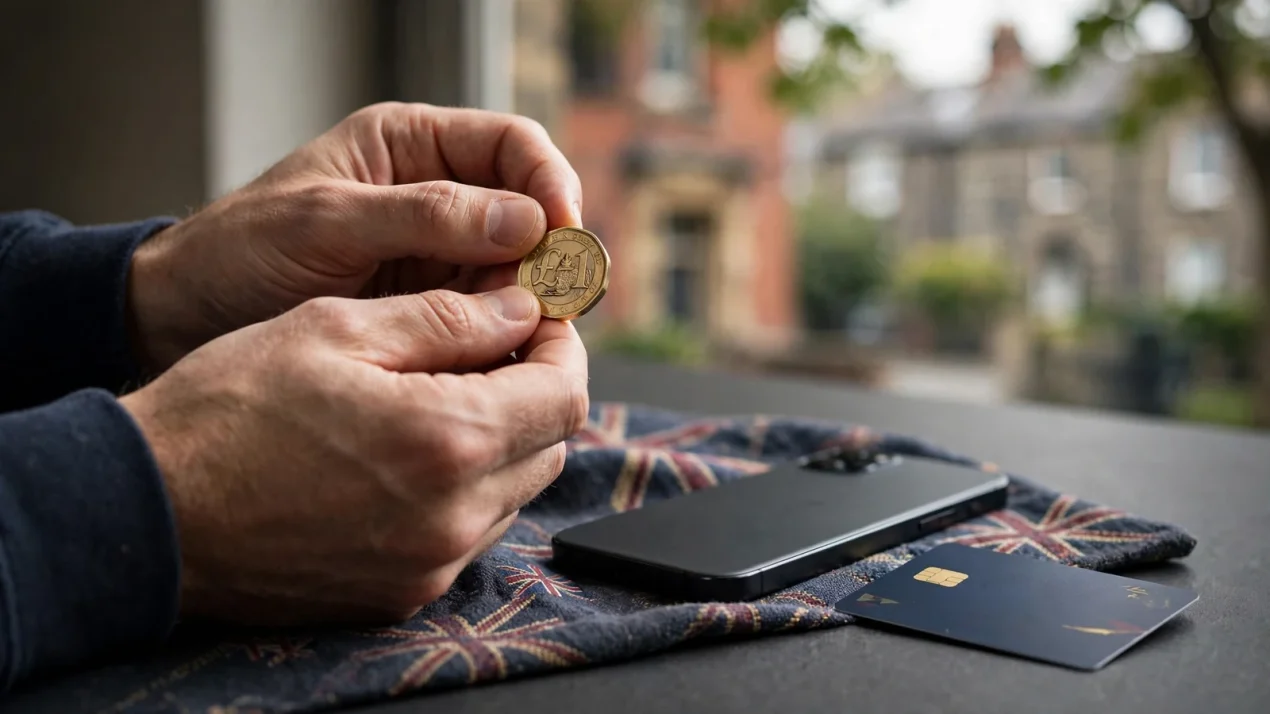
A £1 minimum deposit is a real, but unusual, entry point at some UK online casinos. It means the cashier can accept a payment of £1 to fund an account; it does not mean that £1 is the standard minimum across the market, or that every casino advertising a small starting amount applies it to every customer and payment route.
The distinction matters because a low figure can describe different things. A site may accept a £1 payment through one route while setting a higher minimum elsewhere. An offer may also have its own qualifying deposit, separate from the amount needed to put money into the account. Those are different conditions. The cashier minimum answers only the narrow question of how little can be deposited using the stated route.
A specialist review’s snapshot recorded six UK Gambling Commission-licensed casinos as accepting a genuine £1 minimum deposit. That is evidence that the entry point exists, not a measure of how common it is across all UK-licensed operators. In the same review’s list, only one UKGC-listed casino was recorded as showing £1 as its cashier minimum. The two figures describe the scope of that review and should not be read as a live census of the market. Operators can change their terms, and a page that once listed a £1 option may no longer reflect the current cashier.
For a £1 minimum-deposit casino, check the payment details as well as the minimum stake before signing up. This list highlights the payout-speed information available for the operators on this page.
1. WinBeast
Payout speed: 1-3 business days
WinBeast lists a payout speed of 1–3 business days.
2. Zombillion
Payout speed: 1-3 business days
Zombillion lists a payout speed of 1–3 business days.
3. Chanze
Payout speed: 1-3 business days
Chanze lists a payout speed of 1–3 business days.
4. BeOnBet
Payout speed: 1-3 business days
BeOnBet lists a payout speed of 1–3 business days.
5. Jetsetspins
Payout speed: 1-3 business days
Jetsetspins lists a payout speed of 1–3 business days.
6. Revery Play
Payout speed: 1-3 business days
Revery Play lists a payout speed of 1–3 business days.
7. Dieselwin
Payout speed: 1-3 business days
Dieselwin lists a payout speed of 1–3 business days.
8. SpinFormula
Payout speed: 1-3 business days
SpinFormula lists a payout speed of 1–3 business days.
9. NightWin
Payout speed: 1-3 business days
NightWin lists a payout speed of 1–3 business days.
10. NightLuck
Payout speed: 1-3 business days
NightLuck lists a payout speed of 1–3 business days.
For a player comparing minimum deposit casinos in the UK, the practical meaning is therefore quite specific: some account can be funded from £1 under stated conditions. It says nothing by itself about how broadly the payment option is available, whether it applies to all account holders, or what other rules govern the account. The label is useful only when it matches the cashier terms that apply at the point of deposit.
A £1 entry point is also not interchangeable with a general “low minimum” claim. The latter can refer to a threshold above £1, while a genuine £1 cashier minimum identifies the amount the operator will accept at the lowest end. A casino that accepts a larger deposit is not a £1 minimum-deposit casino merely because it offers small-stake games or promotes a modest starting balance. Those features concern different parts of the service.
The UK market includes operators with higher opening thresholds as well as the small group recorded at £1. So the existence of a 1 pound minimum deposit casino in the UK should not be mistaken for a market-wide expectation. The £1 figure is an edge case, rather than a reliable assumption to apply to every casino. A search result or short promotional phrase may omit the conditions that make the figure accurate, so the relevant evidence is the operator’s own cashier information and terms.
£2 Minimum Deposit Casinos in the UK: How They Work · No Account Casino UK: What the Term Really Means
There is a regulatory distinction as well as a pricing one. A legal online casino serving British customers must hold the relevant UK Gambling Commission licence. A low cashier minimum does not replace that requirement or establish that a site is authorised to serve the UK. The deposit amount and the operator’s regulatory status are separate checks; one cannot be inferred from the other.
The phrase “£1 minimum deposit” should therefore be read literally and narrowly. It indicates a possible entry amount, not a promise that the same threshold applies to all payment methods, all promotions, or all account circumstances. Nor does it establish that £1 is enough to access every feature a site advertises. The amount is a starting condition, not a summary of the full offer.
This is why the rare £1 tier can be useful without being decisive. It lowers the amount required to fund an account where the cashier accepts it, but it does not by itself tell whether the broader terms suit a particular purpose. Treating it as a headline number alone would confuse the price of entry with the value or scope of the service.
In short, UK casinos do accept deposits of £1, but the evidence should be read as confirmation of a limited option, not proof of a typical market minimum. The most precise description is that a small number of reviewed, UKGC-licensed casinos have been recorded at this level, with the recorded cashier minimum applying in specific circumstances. The operative terms remain those displayed by the casino when the account is funded.
In a specialist review, six UK Gambling Commission-licensed casinos were recorded as accepting a genuine £1 minimum deposit, though only one was recorded as showing £1 as its cashier minimum.
How to Compare Low-Deposit Terms
A low cashier minimum is only one part of the comparison. The useful figure is the amount accepted by the payment method selected at the point of deposit, not a headline attached to a casino generally. At some UK operators, the minimum is consistent across the available methods. At others, the bank-transfer threshold is higher than the one for cards or e-wallets. A claim that a site accepts a small deposit therefore needs to be checked against the actual cashier options.
The distinction matters when comparing a £1 entry point with more common thresholds. A specialist review of UK casinos accepting direct banking reports £10 as the typical minimum in that category, with some operators setting £5 and others £20. Those figures are a snapshot from that type of review, not a fixed market rule. They show why the payment route and operator terms need to be compared together: a low amount may be available through one route while another route requires more.
A practical comparison starts with the cashier minimum for each method. If all methods show the same threshold, the deposit amount alone may be sufficient for this part of the assessment. If the bank-transfer figure is higher, compare it with the card or e-wallet minimum rather than assuming the displayed amount applies universally. The relevant figure is the one attached to the intended route, before any promotion or other account condition is considered.
The cashier is more useful than broad wording such as “low deposit”. That phrase does not establish whether the minimum applies to every payment method, only to selected options, or to the account as a whole. The terms should make the distinction clear. If they do not, the apparent lowest minimum cannot safely be treated as the amount available through every route.
Casino Features for UK Online Players
Comparisons also need a consistent basis. A £1 minimum and a £10 minimum are not equivalent entry terms simply because both operators describe themselves as accessible. The smaller threshold reduces the amount needed to fund the account, but it does not by itself establish that the same amount can be deposited through the same method elsewhere. Nor does it establish anything about the wider account terms. It answers one narrow question: what is the minimum payment accepted under the stated conditions?
For a fair comparison, record the operator’s minimum beside the payment method to which it applies. Where the minimum is uniform, note that; where it differs, keep the method-specific figure. This avoids treating one low figure as a universal cashier minimum. It also prevents a direct-banking threshold from being compared with a card figure as though the two describe identical payment conditions.
The phrase “lowest minimum deposit” is therefore incomplete without its method. A lower figure may be relevant to someone intending to use that method, but it is not necessarily the lowest amount available through every route. The same applies to descriptions of a £1 casino: the important point is not the label, but whether the cashier accepts that amount for the selected payment option. A site’s legitimacy is a separate matter from its minimum; in the UK, legal online casinos serving players must hold a current UK Gambling Commission operating licence. A low figure does not substitute for that status.
Do
- Check the actual cashier options for each payment method
- Record the operator’s minimum beside the specific payment method it applies to
- Verify the operator holds a current UK Gambling Commission operating licence
Don’t
- Assume a headline “low deposit” claim applies to every payment route
- Treat a £1 minimum as a universal market-wide expectation
- Substitute a low deposit figure for a check of the site’s regulatory status
It is also worth separating the amount accepted by the cashier from the amount that may be needed to meet another condition. A displayed minimum describes the entry threshold for a deposit, not a promise that every account feature or offer becomes available at that level. Keeping those questions separate makes the comparison more precise: first establish the minimum for the relevant method, then assess any other terms independently. The threshold should not be read as a complete summary of the account.
A concise comparison can be made in three columns: operator, cashier minimum, and payment method. If the operator applies one minimum across methods, the final column can state that it is shared. If the threshold changes by method, list each applicable figure separately. This is more informative than ranking casinos by a single headline amount, because it preserves the condition attached to the number.
For anyone comparing £1 access with higher entry points, the decision is ultimately about the stated payment condition rather than a broad “best” label. A £1 figure is meaningful only when it appears in the cashier for the method being considered. A higher figure may apply to direct banking at one operator, while a different method at that operator has another threshold. The comparison should follow those terms exactly, without assuming that a minimum advertised for one route carries over to another.
£3 Minimum Deposit Casinos in the UK: What to Check · Casino Not on GamStop: Instant Withdrawals Explained
Online Deposits: Which Payment Routes Qualify
A small cashier minimum does not make every way of funding an account eligible. For UK online gambling, the permitted route matters: deposits must come from a debit card, a bank account, or an e-wallet funded by debit. A payment method’s appearance in a cashier does not override the rules on the source of the money.
The UK Gambling Commission’s ban on credit-card gambling took effect in 2020. Since then, UK-licensed casinos cannot accept credit-card payments for gambling. That restriction also covers credit-card funds routed through a money service business. A payment does not become acceptable simply because an intermediary sits between the card and the casino.
Debit cards and direct banking
Visa and Mastercard debit cards are widely accepted for casino deposits. A debit transaction draws on funds held in a bank account rather than borrowing against a credit facility, so it is a permitted category of payment. The card must be used as a debit card; a credit-card transaction is not allowed for gambling deposits.
Direct banking is another qualifying route. Here, the deposit is made from a bank account rather than through a card payment. It remains a distinct option in the cashier, but the key point is the source of funds: the payment must come from the customer’s bank account, not credit.
A cashier minimum and an eligible payment route answer different questions. The minimum states how much an operator will accept for a transaction. Payment eligibility states whether that transaction can be funded through the selected method. A low amount does not change the rule on credit, and an allowed route does not establish that a particular casino will accept a particular deposit amount.
Credit-Card Ban
UK-licensed casinos cannot accept credit-card payments for gambling, including funds routed through a money service business or intermediary.
E-wallets: the funding source matters
An e-wallet can be used only where its funds are not being supplied by a credit card for gambling. Debit-funded e-wallet payments are among the permitted routes. If the wallet allows credit-card funds to be used for gambling, an operator cannot accept that wallet payment for a casino deposit.
This makes the funding path relevant, not just the wallet brand or the button displayed at checkout. A balance built from debit-card funds is different from one supplied by a credit card. If the source cannot be established, the payment may not qualify under the restriction. The name of the method alone is not enough to resolve that point.
The same principle applies when a payment service sits between the bank and the casino. An intermediary does not remove the credit-card prohibition. The relevant distinction remains whether gambling is being funded, directly or indirectly, with credit.
What the rules mean at the deposit stage
UK players must be at least 18 years old, and an operator must verify a customer’s age before allowing a deposit. New customers must also be prompted to set a financial limit before their first deposit. Those requirements sit alongside the payment rules; they are not optional conditions that a smaller transaction can bypass.
For a £1 minimum deposit casino in the UK, the payment route still needs to be one the operator can accept under these restrictions. The figure shown as the cashier minimum does not confirm that every listed method can be used for that amount. Nor does it establish that an e-wallet is eligible regardless of how its balance was funded.
£4 Minimum Deposit Casinos in the UK: What to Check · Online Casino Payouts in the UK: RTP Explained
The practical check is therefore two-part: identify the operator’s accepted deposit methods, then confirm that the chosen route is funded in a compliant way. Debit cards, debit-funded e-wallets and bank-account payments fit the permitted categories. Credit cards do not, including when credit is channelled through a payment intermediary or a wallet.
This distinction keeps the payment decision separate from the amount decision. A £1 entry point describes the cashier threshold; it does not create an exception to the UK credit-card ban or make a credit-funded wallet acceptable.
Real-Money Play on Mobile: The Cost Beyond the Deposit
A £1 minimum deposit on a mobile casino describes the amount that can enter the account; it does not describe how much play that balance buys or whether it can be withdrawn immediately. Those are separate terms. The practical value of a pound depends on the stake selected and, if winnings remain, the operator’s withdrawal threshold.
Many slots accept stakes of £0.10 to £0.20 per spin. If the full £1 balance were used at one of those levels, it would cover five to ten spins before any winnings or losses changed the balance. That is a simple division, not a forecast: each spin can reduce the funds, and a win can increase them. A low opening deposit therefore sets a small starting balance, not a guaranteed session length or return.
The same arithmetic applies on a phone as on another device. A mobile interface does not make the deposited pound stretch further; the selected stake and game outcome determine how quickly the balance changes. When the available funds fall below the stake, further play at that level stops unless additional money is deposited. A £1 entry point can be useful for keeping the initial amount at risk small, but it cannot make a losing sequence cost less than the balance already committed.
Mobile Balance Calculation
Step 1: Determine the balance
Start with the £1 minimum deposit credited to the account.
Step 2: Select the stake
Choose a slot stake, such as £0.10 or £0.20 per spin.
Step 3: Calculate total spins
Divide the balance by the stake: £1 covers ten spins at £0.10 or five spins at £0.20.
Withdrawal terms create a separate calculation. A specialist review reports minimum withdrawal thresholds of £10 to £20 at many UK casinos. This is a reported range, not a fixed rule for every operator, so the cashier terms for the relevant account matter. Where a £10 threshold applies, a £1 balance is £9 short; where the threshold is £20, it is £19 short. Without further winnings, the original deposit alone would not meet either threshold.
That gap matters because a deposit minimum and a withdrawal minimum serve different purposes. The first sets the amount accepted into the account. The second sets the balance required before a withdrawal request can be submitted. A real-money online casino accepting a £1 deposit may therefore allow a small initial stake while still requiring a substantially larger balance for cash-out. The existence of a low entry amount does not establish that £1 can be withdrawn, or that any amount won will be available for immediate payment.
Mobile play can make the distinction less visible: the balance, stake controls and account options appear in the same interface, but they remain separate financial conditions. The deposit funds play; the stake determines the amount exposed on each spin; and the withdrawal threshold determines when a cash-out request becomes possible. Those figures should be read as a sequence rather than treated as one “minimum”.
Online Casinos with No Sister Sites in the UK
Before a first deposit, UK-licensed operators must prompt new customers to set a financial limit and provide account-level controls for managing it. That limit concerns the amount available for gambling, not a promise about winnings or cash-out timing. For a £1 mobile deposit, the useful calculation is therefore not just whether the cashier accepts the pound. It is how much of that balance each chosen spin uses, and how far any resulting balance remains from the stated withdrawal floor.
£1 Deposits and Welcome Bonuses: Check the Qualifying Amount
A cashier minimum and a bonus threshold are separate conditions. A casino may accept a £1 payment into an account while requiring a larger qualifying deposit before its welcome offer becomes available. A specialist review describes welcome-offer entry amounts of £5 to £10; on those terms, depositing £1 funds the balance but does not trigger the promotion.
That distinction matters when comparing a £1 minimum deposit casino with a site advertising a welcome bonus. The headline offer does not change the amount needed to make a qualifying deposit. The promotion’s terms determine whether the payment counts, and some offers set their own minimum even where the cashier accepts less. A deposit below that threshold remains cash in the account, not a qualifying promotional payment.
“No-deposit bonus” also describes a different arrangement from free spins awarded after a £1 deposit. A no-deposit offer does not depend on making that qualifying payment; a deposit-linked offer does. The wording should be checked against the actual terms rather than treated as interchangeable. A low cashier minimum alone establishes neither type of offer.
Attention: A casino may accept a £1 payment into an account while requiring a larger qualifying deposit (often £5 to £10) before a welcome offer is triggered.
Where free spins are linked to a £1 deposit, a specialist review reports offers ranging from 10 to 100 spins. The count is only one part of the calculation. Terms can set an expiry period from 24 hours to 14 days, so unused spins may lapse before they are played. A larger number of spins does not compensate for a short expiry if the full set cannot be used in time.
The cash value of spin winnings may also be subject to wagering. Specialist review material records requirements from 30x to 65x the total winnings, but those figures must not be read as current permissible terms for a UK offer. Since 19 January 2026, UK rules cap wagering requirements on bonus funds at 10x. The terms for a specific promotion must therefore be checked against the rules in force, rather than relying on older promotional descriptions.
A further condition is the maximum stake while wagering bonus funds: bets must not exceed £5 per spin. This can affect how quickly a balance is used and whether the promotional conditions can be completed within the stated expiry. The relevant figure is the stake permitted during wagering, not simply the amount initially deposited.
For any welcome offer, the useful comparison is therefore between the qualifying deposit, the reward actually attached to it, the time available to use it and the conditions on resulting winnings. If a £1 payment does not meet the promotion’s entry threshold, its promotional value is nil; the deposit still serves as account balance. A low entry price is not itself a bonus.
Slot Stakes at Low-Deposit Sites
A £1 minimum deposit can provide a small balance for slot play, but the number of spins depends on the stake selected. Many slots accept bets between £0.10 and £0.20 per spin. If the full £1 is available and each spin loses its stake, that balance covers ten spins at £0.10 or five at £0.20. The arithmetic is simple; the outcome of play is not.
£5 Minimum Deposit Casinos in the UK: What to Check
Those figures are a spending illustration, not a prediction of how long a session will last. A win can increase the balance, while a losing spin reduces it by the amount staked. A game may also offer stake choices that differ from this range, so the displayed controls matter more than the casino’s headline minimum deposit.
The distinction between a cashier minimum and a playable stake is useful here. The cashier determines how little can be added to an account; the slot’s stake menu determines how quickly that balance can be committed. A site that accepts a £1 deposit does not, by that fact alone, establish that every game can be played at the lowest end of the stated range. The game itself sets the available options.
For a small-deposit account, the difference between £0.10 and £0.20 per spin is material: the higher stake uses twice as much of the starting balance each time. Choosing a lower stake preserves more opportunities to play from the same deposit, although it does not change the game’s underlying results or ensure that any balance remains. There is no financial advantage in treating a larger number of spins as a better return; it is simply a slower rate of exposure.
A practical check is to open the game’s stake controls before starting and confirm the minimum shown. This is especially relevant when comparing £1 deposit slot sites: the deposit figure describes entry to the account, not the cost of each round. If the lowest available stake exceeds the amount intended for a spin, the game does not fit that budget, whatever the cashier minimum says.
Choosing a lower stake, such as £0.10 instead of £0.20, preserves more opportunities to play from the same deposit, although it does not change the game’s underlying results.
The same calculation applies to small-deposit casinos more broadly. Divide the available balance by the chosen stake to estimate how many losing spins it can cover, then allow for wins and losses to change that balance. It is a useful budget boundary, not a forecast. A £1 deposit can be enough to begin playing a low-stake slot, but it remains a limited balance, not a promise of a particular session length.
PayPal and the Operator’s Payment Minimum
PayPal does not automatically create a lower entry point at a UK casino. The cashier minimum is generally set by the operator, and the same threshold can apply across payment methods, including cards and e-wallets. An account that accepts PayPal therefore cannot be assumed to accept a £1 deposit through it.
The amount shown in the cashier is the relevant condition. A casino may offer several ways to pay while applying one minimum to all of them. Some operators make an exception for direct banking by setting a higher minimum for that route than for cards or e-wallets. That difference does not establish that PayPal has a lower minimum; it only means the operator’s terms vary by payment method.
A £1 minimum deposit casino in the UK that also accepts PayPal is a specific combination of conditions, not a general feature of PayPal. The operator must support the wallet, and its cashier terms must allow that amount. Where the listed minimum is higher, selecting PayPal does not reduce it. The displayed minimum and the payment-method terms should be read together before a transaction is started.
Jackpot Mobile Casinos in the UK: Pool Rules
The distinction is between the payment service and the casino’s account rules. PayPal is a route for moving funds; the operator determines the amount accepted into the gambling account. A low threshold associated with another route at the same casino is not proof that PayPal shares it.
Before making a first deposit, new customers must be prompted to set a financial limit. That account-level decision is separate from the cashier minimum: one defines the amount accepted per transaction, while the other controls the account’s financial exposure. A small payment does not remove the need to establish that limit.
Low Deposits, Withdrawal Floors and Account Limits
A £1 cashier minimum describes the amount accepted into an account, not the amount that can necessarily be taken out. A specialist casino review reports that many UK casinos set minimum withdrawals between £10 and £20. At an operator with a higher withdrawal floor, a small balance may remain in the account until it reaches the stated threshold; the deposit itself does not make that balance immediately payable.
The same review notes that some operators restrict payment methods at the £1 level or do not count a £1 deposit towards a welcome offer. These conditions affect what the entry amount can do, even where the cashier accepts it. The withdrawal page and the payment terms therefore matter alongside the deposit screen: the relevant figures are the minimum accepted to fund the account and the minimum permitted for a withdrawal, not one isolated headline amount.
Key Financial Terms
- A £1 cashier minimum is the amount accepted to fund an account, not the amount that can be withdrawn.
- Minimum withdrawal thresholds at many UK casinos typically range from £10 to £20.
- New customers must be prompted to set a financial limit before their first deposit.
- Some operators may restrict payment methods at the £1 level or exclude it from welcome offers.
There is also a separate account-level control to consider before money is deposited. Remote operators must prompt new customers to set a financial limit before their first deposit and make limit controls accessible in the account. That limit is distinct from the casino’s cashier minimum: it sets a boundary on account funding or play, while the cashier minimum determines whether a transaction can be submitted. A £1 deposit does not replace that prior limit-setting step.
The practical value of a low entry point depends on these terms together. If the withdrawal threshold sits above the available balance, or the chosen payment route is unavailable at that deposit level, the advertised minimum may offer little immediate flexibility. The operator’s current cashier and withdrawal conditions determine the actual position.
The 2026 Bonus-Wagering Rule
Since 19 January 2026, the UK Gambling Commission has limited wagering requirements on bonus funds to 10x. For a UK-licensed casino, that means a promotion cannot require bonus money to be wagered more than ten times before the relevant withdrawal conditions are met. The cap concerns wagering on bonus funds; it does not turn a bonus into cash that can be withdrawn without meeting its terms.
Older promotional material may quote requirements of 30x to 65x the bonus value. That range appears in specialist casino reviews describing offers and terms from other periods, so it should not be treated as the permitted current ceiling for a UK-licensed promotion. A dated page can remain visible after its terms have changed; the number on it is not a substitute for the conditions attached to the offer now.
The wording of a bonus also matters. The stated cap applies to bonus funds, while free-spin winnings may have their own wagering condition. The promotion terms should identify what amount is subject to wagering and how it is calculated. Where a requirement exceeds the current limit for bonus funds, the offer should not be assumed to be compliant simply because it is described as a welcome bonus or appears on a casino page.
£20 Minimum Deposit Casinos in the UK: Payment Rules
This rule does not establish that a casino is new, nor does it change the amount needed to open or fund an account. A £1 cashier minimum and a bonus wagering condition are separate terms. The relevant check is whether the promotion is available under the current rules and whether its stated requirement fits within the cap.
SMS Billing and the £1 Deposit Tier
Paying for a casino deposit through a mobile phone account can be associated with the £1 entry point, but this is a narrow option rather than a standard feature. A specialist review describes the lowest UK casino deposit tier as rare and linked to particular mobile-billing services, including Boku and Payforit. That does not establish that every casino, mobile network or account supports either service.
The payment route and the cashier minimum are separate conditions. A casino may offer mobile billing without accepting a £1 deposit, while a £1 minimum may apply only to selected methods. The amount shown in the cashier before confirmation is therefore the relevant threshold; the presence of a phone-billing option alone does not confirm eligibility for a £1 payment.
No ID Verification Withdrawals at UK Casinos
Fees can alter the arithmetic materially. A specialist review reports that some payment providers apply flat transaction charges of £1 to £3. If such a fee applies to a £1 deposit, the transaction costs £2 to £4 in total, before any gambling takes place. The fee may be imposed by the payment provider rather than forming part of the casino balance, so the deposit credited and the amount charged to the phone account need not match.
Mobile billing can therefore provide access to a small deposit, but it is not automatically the cheapest way to fund one. The fee, the cashier’s stated minimum and the amount actually credited should be treated as separate figures. Before the first deposit, the operator must also prompt new customers to set a financial limit; age verification is required before depositing.
Do direct banking deposits qualify for welcome bonuses at UK-licensed casinos?
Yes. Direct banking deposits qualify on the same basis as card or e-wallet deposits, with the same bonus terms regardless of payment method.
Can I use a £1 deposit to claim all welcome bonuses?
No. Welcome offers typically require a £5 to £10 deposit, and some casinos exclude the lowest deposit bracket from promotions.
Why are there so few 1 pound deposit casinos?
A £1 minimum is a rare entry option, often limited to specific payment methods. Some casinos also set higher deposit thresholds for bank transfers or exclude the lowest deposit bracket from welcome promotions.
What is the current minimum deposit?
The lowest UK casino deposit tier is £1, but it is rare and may be limited to particular payment methods. The minimum shown in the cashier for your chosen method is the amount that applies.
This material was created by the Lucky Vegas UK Guide team.
Related posts

UK Online Casino Ratings and Amatic Games

Wazdan Online Casinos in the UK: Availability Checks
